
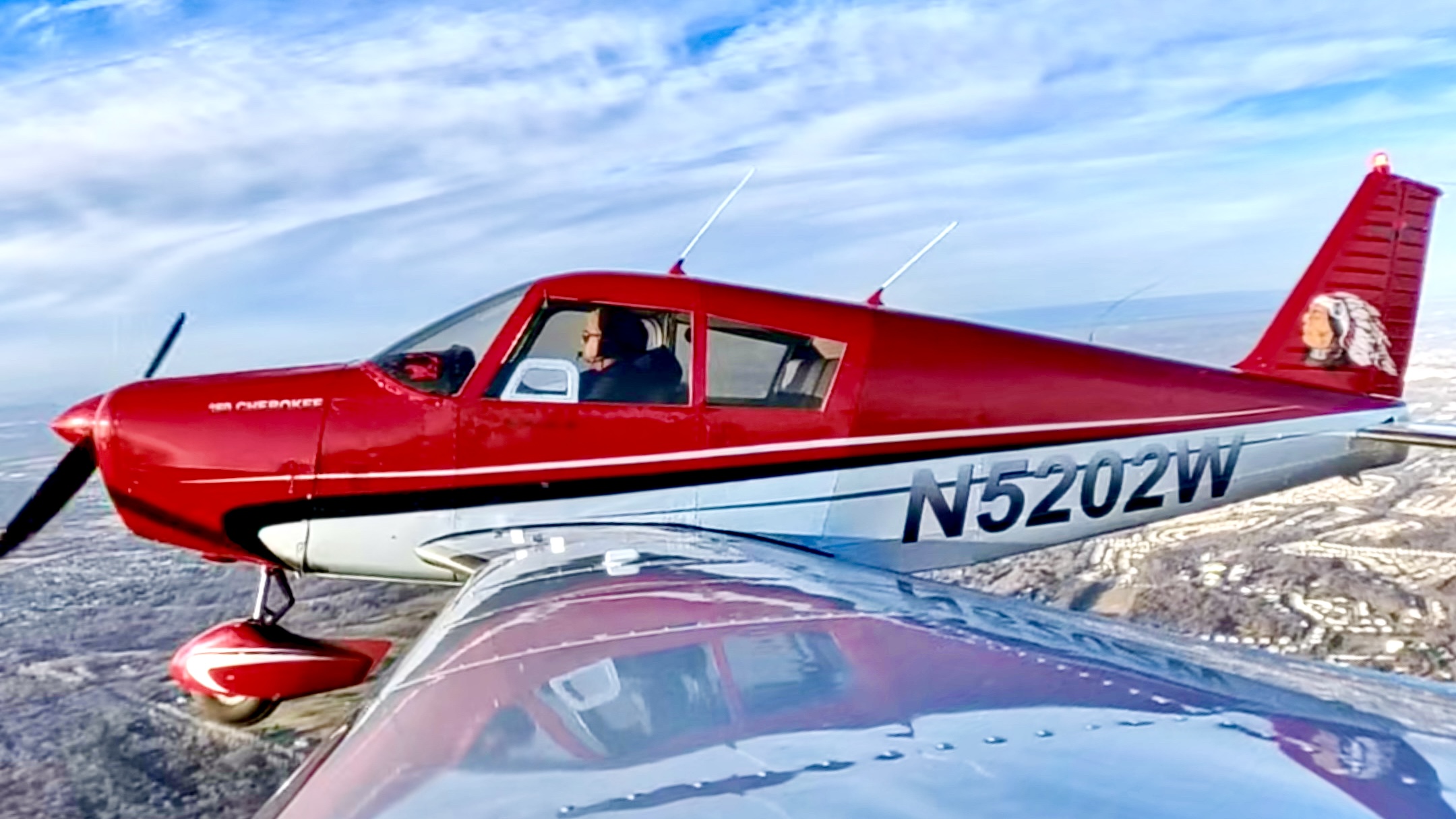
The Piper PA-28: History, Specs, and Why It Became a Training Icon
Few airplanes are more recognizable in modern general aviation than the Piper PA-28. If you have spent time around flight schools, tiedowns, or private aircraft ownership circles, you have almost certainly seen one. The PA-28 line has served as a trainer, personal traveler, time-builder, and family airplane for decades, and it remains one of the most important product families Piper ever built.
That longevity did not happen by accident. The PA-28 succeeded because it combined straightforward handling, practical operating economics, predictable systems, and a design flexible enough to support multiple engines, cabin layouts, and mission profiles. On HangarVault, it is exactly the kind of aircraft family buyers research carefully because the name stays constant while the details can vary significantly from one variant to the next.
Understanding the history and baseline specs of the PA-28 helps separate the marketing label from the actual airplane. A Cherokee 140, Archer, Warrior, Arrow, and Dakota all belong to the same broad family, but they do not deliver the same ownership experience.
How the PA-28 Started
The PA-28 first emerged in the early 1960s as Piper’s response to the need for a practical all-metal, fixed-gear, low-wing airplane that could serve private owners and training operators alike. Piper had already established itself with aircraft like the high-wing PA-18 Super Cub and the PA-24 Comanche, but the company needed a simpler, broader-market design that could compete effectively in the light-aircraft segment.
The original Cherokee introduced a clean, low-wing layout with tricycle landing gear, side-by-side seating, and handling characteristics aimed at accessibility rather than speed prestige. That formula proved durable. Over time, Piper expanded the PA-28 line into a full family that addressed everything from ab initio training to complex-aircraft transition work.
What made the PA-28 especially successful was its adaptability. Piper could evolve the airframe with different engines, improved interiors, tapered wings, retractable gear, and payload changes while preserving the familiarity that made the platform attractive to instructors, owners, and maintenance shops.
The Core Design That Defined the Family
At its heart, the PA-28 is a single-engine piston aircraft with a low wing, all-metal construction, tricycle landing gear, and a cabin built around ease of use. Most versions seat four, although useful load and cabin practicality vary enough that real-world carrying capability depends heavily on the exact model, installed equipment, and fuel plan.
The landing gear configuration and relatively forgiving handling helped make the type popular with schools. So did the stable platform, simple systems compared with more complex touring aircraft, and a broad ecosystem of parts, mechanics, and operating knowledge. The PA-28 was not designed to be exotic. It was designed to be useful, and usefulness often wins in aviation.
Another major factor in the PA-28’s staying power is that buyers can usually find a variant matching their mission. A low-time student, a private owner upgrading from a trainer, and a pilot looking for retractable-gear complex time can all end up shopping the same family name for different reasons.
Typical Baseline Specs
It is important to treat PA-28 specs as a range rather than a single set of numbers. Across the family, horsepower commonly falls between about 140 and 235 depending on the variant. Cruise speed often ranges from roughly 105 knots in lower-powered training configurations to around 140 knots or more in higher-powered retractable or heavier-hauling versions. Fuel capacity, useful load, and climb performance also vary substantially.
A typical training-oriented PA-28 such as a Warrior might offer:
- A four-seat cabin with practical two-to-three-adult mission flexibility depending on fuel and baggage.
- A Lycoming engine in the roughly 150 to 160 horsepower range.
- Cruise performance around the lower-to-middle 100-knot range depending on power setting and altitude.
- Fixed landing gear and a simple systems profile that keeps training and ownership approachable.
Move into an Archer or Dakota and the airplane becomes more capable as a personal cross-country machine. Move into an Arrow and you add retractable gear and constant-speed-prop complexity, which changes both training value and maintenance exposure. The family resemblance remains, but the cost structure and mission profile move with it.
Major Variants Buyers Should Know
The PA-28 family includes a number of well-known variants, and buyers should not treat them as interchangeable.
Cherokee 140 and Cherokee 150: These aircraft became staples of training fleets and private ownership. They are often valued for simplicity, predictable manners, and broad parts familiarity.
Warrior: The Warrior continued the trainer-friendly role and became one of the most common PA-28 names in modern schools. It is often associated with practical handling and manageable ownership costs.
Archer: The Archer brought more power and a stronger cross-country identity while still retaining the approachable characteristics that made the family popular.
Arrow: The Arrow added retractable gear and, in many configurations, a constant-speed propeller. That made it a key aircraft for complex endorsements, commercial training, and owners wanting more performance without leaving the PA-28 ecosystem.
Dakota: The Dakota pushed the family toward greater useful load and stronger carrying capability, making it attractive to owners who wanted more airplane without moving to a six-seat platform.
This is why listing analysis matters. The words Cherokee or PA-28 alone do not tell you enough. Engine model, wing type, avionics package, weight-and-balance reality, and maintenance history matter more than the family badge by itself.
Why the PA-28 Became a Flight Training Mainstay
The PA-28 became deeply embedded in flight training because it offered a manageable cockpit, forgiving runway behavior, and a broad support network. Schools benefit from airplanes that can absorb repetitive use, remain understandable to instructors and mechanics, and deliver a consistent student experience. The PA-28 checked those boxes for decades.
Students also benefited from the type’s straightforward systems and widespread availability. Training in a common airframe makes scheduling, transition planning, and instructor standardization easier. It also means many pilots carry familiarity with the family into their ownership years, which supports resale demand.
That installed base became a self-reinforcing advantage. More airplanes in service meant more mechanics familiar with them, more institutional knowledge, and more buyer confidence. In aviation, ecosystems matter almost as much as airframes.
What Buyers Should Watch in the Market
PA-28 buyers need to evaluate aircraft at the variant and condition level, not the family level. A clean, well-documented Warrior with sensible avionics can be a very different value proposition from a heavily upgraded but maintenance-deferred Arrow. The shopping process should focus on logs, engine status, corrosion exposure, landing gear condition, avionics supportability, and the real mission you intend to fly.
It is also important to think about use case discipline. Many buyers shop a PA-28 because it feels familiar, then quietly expect it to do a mission that belongs to a different class of aircraft. A basic trainer-derived variant may be perfect for local flying, instrument training, and shorter cross-countries while being a weak fit for heavy-load summer travel. Matching the exact model to the mission is where smart ownership begins.
Avionics modernization is another major factor. Some PA-28s now carry attractive glass panels and updated autopilots, while others still rely on legacy equipment that may drive near-term upgrade spending. Purchase price alone rarely tells the full story.
Why the PA-28 Still Matters
The Piper PA-28 matters because it represents a rare combination of durability, familiarity, and mission flexibility. It helped define what a practical general aviation airplane could look like for generations of pilots. That is why the line remains so visible in training fleets, private ownership, and used-aircraft marketplaces.
For buyers, the lesson is straightforward: do not shop the PA-28 as a generic name. Shop it as a family of related but distinct airplanes. When you do that, the PA-28 stops being just a famous aircraft line and becomes a genuinely useful search category with options that can fit very different budgets and flying goals.
That is exactly why the PA-28 continues to reward careful research. Its history is broad, its variants are meaningful, and its place in general aviation is secure.