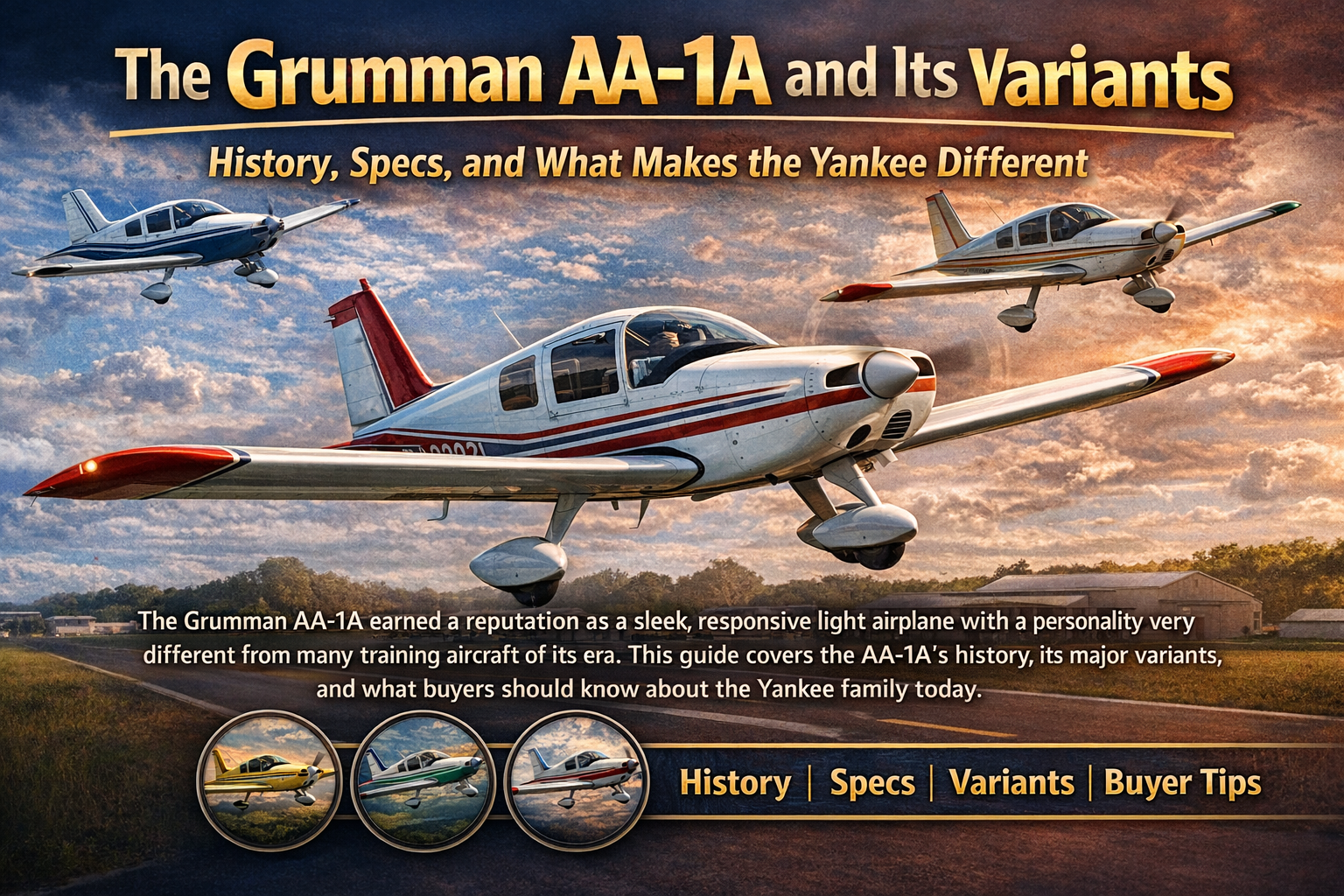
The Grumman AA-1A and Its Variants: History, Specs, and What Makes the Yankee Different
The Grumman AA-1A occupies a distinctive place in light-aircraft history. It was never the most common trainer on the field, and it was never meant to be an anonymous utility airplane. Instead, it developed a following because it looked sharper, felt more responsive, and flew with a personality that stood apart from the more familiar training machines of its era.
That is still why buyers notice it today. The AA-1 line, often associated with the Yankee name, appeals to pilots who want a low-wing airplane with efficient performance, responsive controls, and a design philosophy that feels a little more sporting than the mainstream alternatives. On HangarVault, that makes the AA-1A family exactly the kind of aircraft that benefits from careful research before buying, because small differences between variants can materially change the ownership experience.
To understand the AA-1A, it helps to understand the entire AA-1 family. The original AA-1, the AA-1A Trainer and TR-2, the later Lynx, and the final T-Cat all share common roots, but they were shaped by evolving priorities in training, certification, and owner expectations.
Where the AA-1 Came From
The AA-1 lineage began with American Aviation, a company that pursued a modern approach to light-aircraft design. The goal was not just to copy the established formula. Instead, the designers aimed for a cleaner airframe, bonded aluminum construction, and a low-wing layout that gave the airplane a more contemporary and performance-minded feel.
After certification and early production, the program eventually came under Grumman American, which is why the aircraft is so commonly remembered today as a Grumman product. Over time, the line moved through additional corporate ownership changes, but the essential design identity remained recognizable: compact, efficient, and more responsive than many pilots expected from a small trainer-class airplane.
That design DNA is a big part of what still attracts owners. Even people who have not flown an AA-1A often know its reputation. It is the little Grumman that feels quicker on the controls, looks cleaner on the ramp, and demands a little more precision from the pilot.
What Made the AA-1A Different
The AA-1A stood apart partly because of its handling and partly because of its construction philosophy. Compared with more conventional training aircraft, the airplane felt sportier. It was light on the controls, relatively slick for its horsepower, and less interested in floating through sloppy pilot inputs. That gave it appeal, but it also meant it was not always viewed as the most forgiving ab initio trainer in every context.
Its bonded aluminum construction was another talking point. This was a distinctive element of the line and contributed to the airplane’s clean aerodynamic shape. Buyers today should understand both the benefits and the maintenance implications of that approach. The right inspection matters, and familiarity with the type matters even more.
The AA-1A also benefited from efficiency. It delivered respectable performance for a modest engine, which helped reinforce the sense that the airplane was doing more with less. That efficiency, combined with sharp styling, helped build the Yankee mystique.
Baseline Specs and Performance Character
Exact numbers vary by variant, engine, propeller, equipment, and weight, but the AA-1 family generally lives in the small two-seat light-aircraft category with Lycoming power in the roughly 100 to 115 horsepower range depending on the model. The airplanes are known more for efficient cruise and responsive feel than for heavy-load utility.
A typical AA-1A profile generally includes:
- Two seats and a compact cabin intended more for personal flying than broad carrying flexibility.
- Cruise performance that feels efficient relative to installed horsepower.
- Responsive control feel that many pilots describe as more lively than the average trainer.
- A lower-margin approach to landing and energy management compared with more forgiving primary trainers.
That last point is important. The airplane is not unsafe because it expects accuracy; it just rewards precision. Buyers moving into the type from heavily stabilized trainers should recognize that the AA-1A’s reputation comes with both enjoyment and responsibility.
Understanding the AA-1 Variants
The family names can be confusing if you have only seen listings casually, so it helps to break the line into its major forms.
AA-1 Yankee: The original model established the concept. It introduced the family’s sleek look and sporty personality, but it also built the early reputation for sharper handling and a more demanding landing profile.
AA-1A Trainer and TR-2: The AA-1A evolved the original design and is often the model buyers have in mind when they talk about the classic Yankee era. Changes were aimed in part at making the airplane better suited to training and broader use while preserving the efficient low-wing identity.
AA-1B: Later development continued to refine the line, with incremental improvements and distinctions that matter when reviewing logs, POH data, and maintenance history.
AA-1C Lynx: The Lynx pushed the concept further with more power and a somewhat broader mission appeal. It is often the version buyers consider when they want the AA-1 feel with a little more capability.
AA-1X T-Cat: The T-Cat represented the final version of the line and was shaped more directly by training needs, including changes intended to make the aircraft more accessible in that role.
The key point for buyers is that the variant name is not cosmetic. It affects handling expectations, performance, support conversations, and market value. A listing that simply says Grumman Yankee without precise model context does not tell you enough.
Why Some Pilots Love the Yankee Family
The AA-1 family built loyalty because it gives pilots something they do not always find in entry-level or trainer-adjacent aircraft: character. These airplanes are often described as fun, direct, efficient, and satisfying to fly well. For pilots who value crisp response and a more connected feel, that matters.
There is also an aesthetic element. The AA-1 line has always looked fast relative to its class, and appearance counts more in owner enthusiasm than people sometimes admit. A clean Grumman on the ramp tends to attract attention.
That said, affection for the type should not replace discipline in evaluation. The same traits that make the airplane interesting are the traits that require buyers to be honest about mission, proficiency, and maintenance support.
What Buyers Should Check Before Purchasing
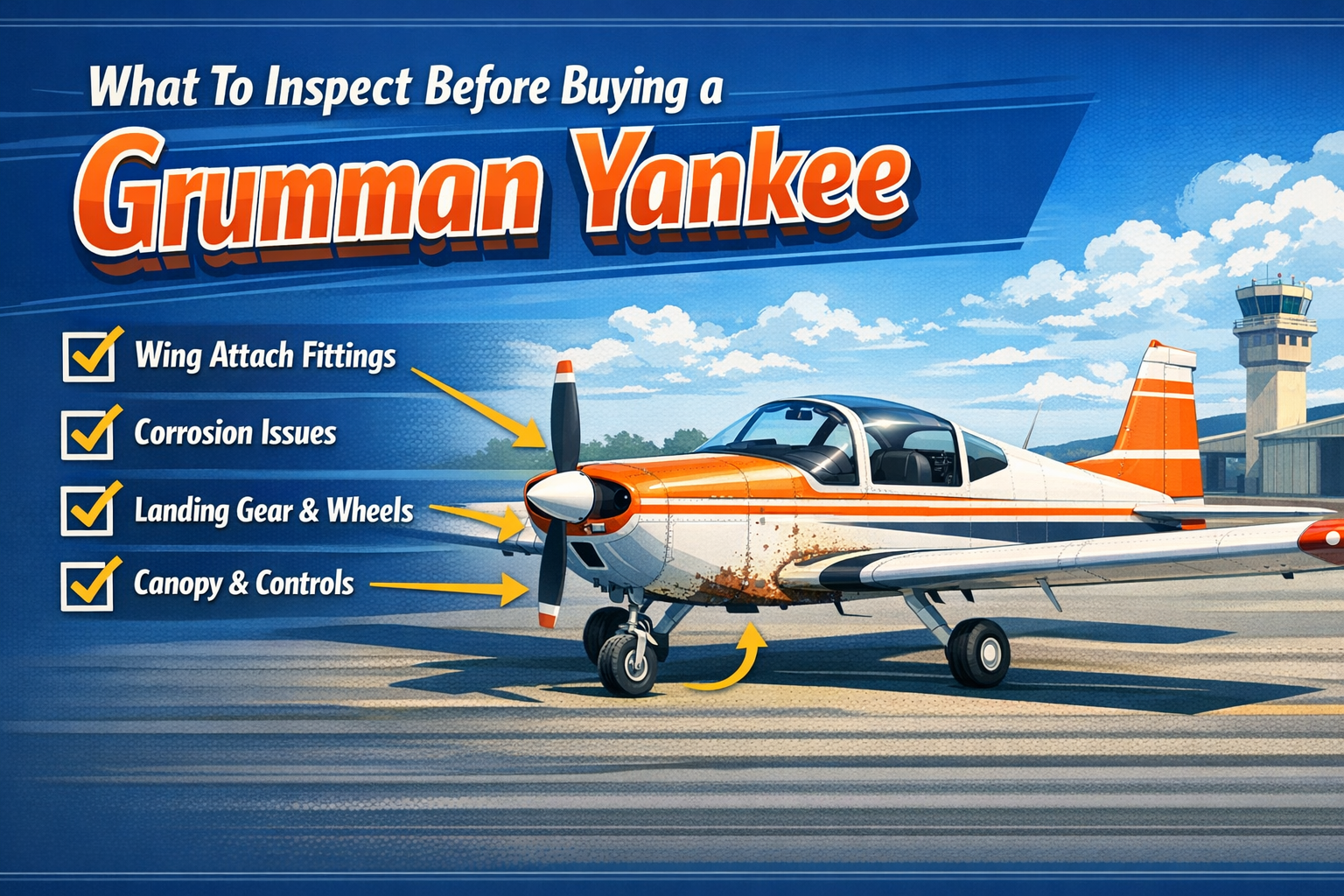
A pre-buy inspection on an AA-1A or related variant should be done by someone who understands the line. That is not optional if you want real clarity. Bonded structure, corrosion considerations, landing-gear condition, logbook continuity, fuel tank history, control rigging, and engine status all deserve careful review.
It is also worth looking closely at how the airplane has been used. A clean, consistently flown personal aircraft with organized records is one thing. A neglected aircraft with cosmetic shine and thin documentation is something else entirely. The AA-1 market can reward patience because the right example is far more valuable than the cheapest entry point.
Avionics are another area where prices can mislead buyers. Some airplanes in the fleet have received meaningful upgrades, while others remain simple and legacy-equipped. That is not necessarily a problem, but it needs to be reflected in both price and mission planning.
Why the AA-1A Still Matters
The Grumman AA-1A still matters because it represents a different answer to the question of what a small personal airplane should be. Where some aircraft in the category emphasized maximum docility, the AA-1A emphasized efficiency, style, and more engaged flying. That gave it a smaller but durable following.
For the right buyer, that difference is exactly the point. The AA-1A is not just another two-seat light airplane. It is part of a family with a clear design identity and a distinct flying reputation. If you shop it with the right expectations, it can be one of the more interesting vintage light-aircraft options on the market.
That is why the Yankee family still earns attention. Its history is specific, its variants matter, and its appeal goes beyond simple transportation.